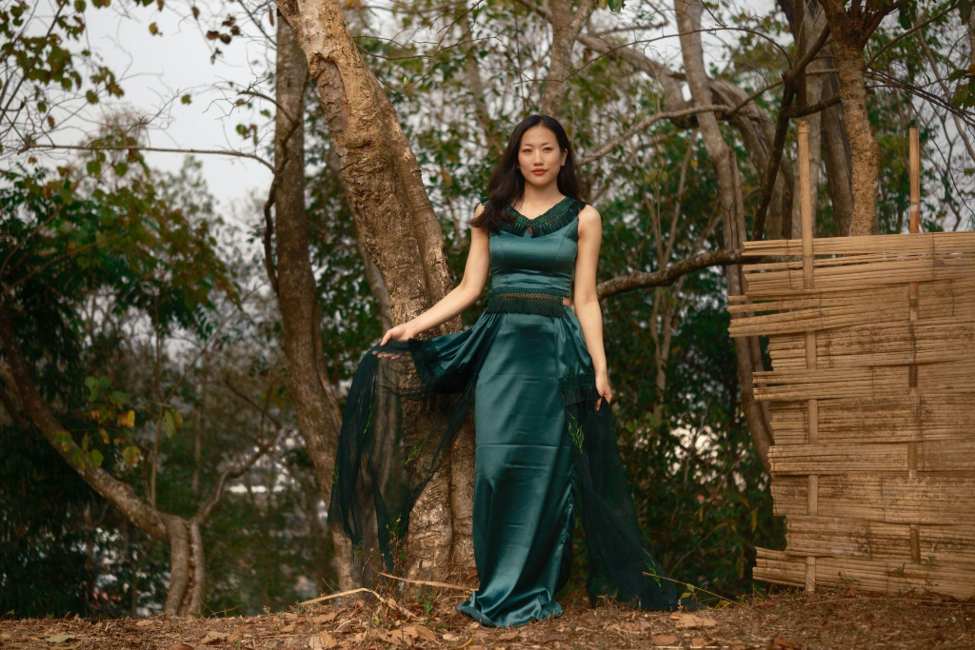
Chawngtinleri: The Queen of the Forest Spirits
It is said that all wild animals are born in the mystical plains of Buannel, created and tended to by Chawngtinleri. Though known as the Queen of the Lasi, she was originally a beautiful mortal woman from the village of Seipui. She was taken as a wife by the Lasi King, Lalchungnunga, and transformed into the majestic guardian of the animal kingdom. The Myth of Her Origins In Mizo tradition, it is believed that wild animals are "herded" (khal) by the Lasi. These spirits are said to dwell primarily on the peaks of Tan Tlang and Lurh Tlang. Hunters who are "favored" (zawl) by the Lasi are remarkably successful, often receiving dreams from the spirits telling them where to find their prey. Chawngtinleri was a maiden of extraordinary beauty. One version of the story says she was abducted by the Lasi while working at her forest farm shed (thlam); others say she was taken directly from her home. Once she became the Queen of the Tan Lasi, she gained absolute authority over the beasts. Initially, she pined for her mortal life and wept constantly out of homesickness. To stop her longing for the human world, the Lasi "turned her eyes vertically" (mit tihtunsak), which altered her nature and erased her desire to return to mankind. The Story of Chawngtinleri and Her Brother, Liana Chawngtinleri lived with her brother, Liana, after their parents died young. They were deeply devoted to each other. The Lasi King, Lalchungnunga, desired Chawngtinleri as his "animal herder" and repeatedly asked Liana for her hand. Liana, proud of his sister, refused the spirits. However, the spirits promised him endless blessings: "I will give you every kind of game; I will even give you the Great Red Boar (Nghalphusen)," they whispered in his dreams. One night, in his sleep, Liana finally muttered, "So be it." The next morning, Chawngtinleri went out to pound rice and screamed, "Oh, my brother Liana!" By the time Liana ran outside, she was gone, leaving only a valuable necklace (thi) on the mortar. Liana spent years wandering the slopes of Tan Tlang in grief. Eventually, the invisible voice of his sister spoke to him: "My brother, this was your choice. Do not grieve anymore; go and hunt in peace." From then on, Liana became the greatest hunter, as his sister steered the animals toward him. The Ordeal of the Red Boar (Nghalphusen) The Lasi eventually decided to fulfill their promise of the Nghalphusen (a legendary, massive red boar). As the Lasi herded the beast toward Liana, they shouted, "Go forth for Liana’s fame!" The boar was so massive it filled the mountain pass, with tusks as wide as wooden platters. However, Liana was so excited that he smiled, showing his teeth. The boar immediately vanished. The Lasi warned him, "Do not show your teeth (laugh) again, or you will never have him." Twice more, Liana failed to control his excitement, and the Red Boar vanished forever. It is said the tracks of this legendary boar can still be seen today at Tawi Tlang. The Vertical Eyes and the Loss of Humanity Chawngtinleri eventually had a child with the Lasi King. She would often visit Liana but hid her child’s face. One day, while she was away, curious villagers peeked at the child and were horrified to find a human body with a goat’s head. When the Lasi discovered that their true form had been revealed to humans, they were furious. They permanently fixed Chawngtinleri’s eyes in a vertical position, completely severing her emotional tie to humanity. Legacy and Worship To this day, "Chawngtinleri’s Cave" (Chawngtinleri Puk) can be seen on the eastern side of Tan Tlang. She remains the deity whom hunters seek to please. Ancient hunting songs (Salu lam hla) often mention her: "The great boar with fine tusks roams the lands, Chawngtinleri is his herder. She herds him to Liana’s house, To the home of the famous hunter." Hunters used to decorate the trophies of their kills with white rooster feathers (arngo thla), believing this pleased Chawngtinleri. Legend tells of a hunter who returned to a kill-site to find a woman—Chawngtinleri herself—dancing and weeping over the animal, singing about how she regretted giving up her "child" (the animal) just for the sake of a few white feathers. The man who witnessed this divine grief is said to have died shortly after.