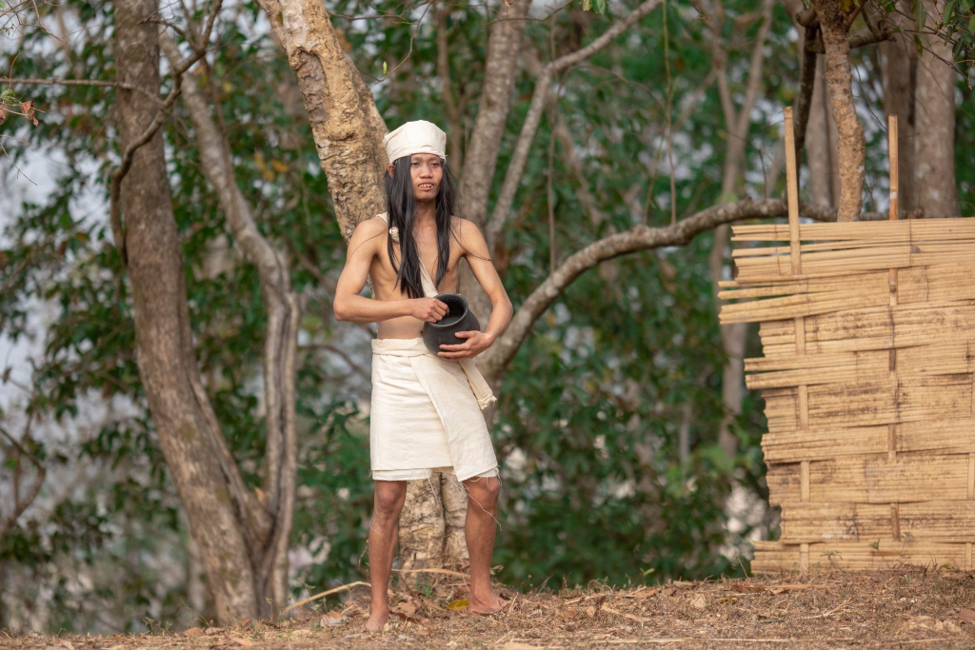
The Story of Chepahakhata
Chepahakhata was a young man considered very unattractive because of his crooked, protruding teeth (resembling those of a forest rat/shrew), which is how he earned his name. Though people thought he would never find a wife, he eventually married a beautiful woman who was also a powerful sorceress. Through his wife, he obtained a magical pot known as the Belte-phai-thei-lo (The Little Pot That Never Empties). This magical object represents the ultimate abundance dreamed of by our Mizo ancestors. Furthermore, through Chepahakhata's wit, the story demonstrates that Mizos are more clever than the people of the plains (Vai). The Detailed Narrative Chepahakhata was so unattractive that he had no hope of marriage. However, by a stroke of good fortune, he found a wife who happened to be a sorceress. With her magic, she transformed a wild banana grove into a magnificent, prosperous village. They became the rulers of this village, and Chepahakhata lived a life of great comfort. They eventually had a daughter, which brought him much joy. However, Chepahakhata became too absorbed in his new status. He spent all his time wandering and socializing, being entertained with rice beer and feasts by his subjects. He became so lost in his enjoyment that he forgot to return home. Even when his wife sent their daughter to call him back multiple times, he refused to leave his festivities. Furious at his neglect, his wife used her magic to turn the entire grand village back into a wild banana grove and ascended to the heavens with their daughter to live with Pu Vana (the God of the Heavens). When Chepahakhata finally "woke up," he found himself alone in the middle of a desolate forest. He wandered aimlessly, lonely and starving. His daughter, looking down from the heavens, took pity on him. With her mother’s permission, she lowered the Belte-phai-thei-lo to him, ensuring he would have food whenever he was hungry. One day, he arrived at the village of a Plains King (Vai Lal). Because of his appearance, the King despised him and challenged him to a rice-eating contest, threatening to kill him if he ate less than the King's men. The King had his subjects cook a massive amount of rice. However, thanks to his magical pot, Chepahakhata won. In a fit of rage, the King smashed Chepahakhata's pot and had him wedged into the top of a banyan tree. While trapped in the tree, Chepahakhata overheard a council of birds—the Vaiva (Greater Racket-tailed Drongo) and the Vakul (Lady Woodcock). The Vaiva argued that the Vai were smarter, while the Vakul defended the Mizo. They set up a series of riddles to test which race was superior: identifying the parent from the offspring, distinguishing the head of a log from its base, and figuring out which side of a traditional basket (Thul) was the lid. Because Chepahakhata overheard all the secret answers, he was able to help his Mizo kinsmen win every challenge. Observing this from the heavens, his wife and daughter grew proud of him. His wife forgave him for his past mistakes and descended back to earth. Once again, she transformed the banana grove into a magnificent village. Chepahakhata turned away from his bad habits, and the family lived together in great happiness.